
Monday, December 3, 2018
Voyage of the SS St. Louis
937 passengers were aboard on the SS St. Louis fleeing from the Nazis on May 13, 1939. All of the passengers were desperate to flee from the Third Reich and all of the discrimination towards Jewish people. From Germany the people on board hoped to disembark in Cuba and finally be free. A major flaw with this idea was that many Jewish refugees were already in Cuba and were competing for scarce jobs, so the chances of the Cuban government admitting them were significantly lower. This turned out to be true as only 29 people were allowed into the country when they finally arrived. Being so close to Florida, the people on the ship wrote to the Franklin D. Roosevelt, but it was of no use since he never responded. This forced the ship to turn back and head back to Europe where after the Holocaust was over 254 of the 907 that remained were dead.

Sunday, December 2, 2018
Abbott and Costello
Abbott and Costello also known as Lud Costello and Bud Abbot were an American comedy duo in the 1940's.There work became popular on radio and film and then television. Abbott was born into a circus family, and he spent a lot of time backstage studying the most up to date American Comics. In 1923, he produced his own show called Broadway Flashes in which he played the lead role. Costello on the other hand spent most of his childhood following Charlie Chaplin and admired him dearly. He decided to move to Hollywood in 1927, where he started his career as a stuntman, but had to quit due to an injury. He left to New York and started working onstage there. In 1936 Costello and Abbott performed together and in 1936 they formed their duo. Their first routine and they one that they became famous for was "Who's on First?" which was a baseball sketch.
Executive Order 9066
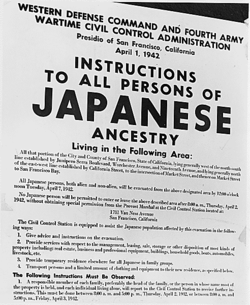
Executive Order 9066 was a presidential executive order signed and issued during World War 2 by President Roosevelt on February 19, 1942. This act was encouraged by officials at all levels of the federal government, it authorized the interment of tens of thousands of American citizens of Japanese ancestry and resident aliens of Japan. It banned any citizen from a fifty to sixty mile wide coastal area stretching from Washington state to California and extending inland into southern Arizona. They would transport these citizens to assembly centers hastily set up and governed by the military in California. Something that is not known is that the same executive order applied to smaller number of residents of the United States who were of Italian or German descent. Around 3,200 resident aliens of Italian background were arrested and around 300 were interned. Around 11,000 Germans were arrested and 5,000 were interned. The war time measures applied to the Japanese were worse and more sweeping. Overall this was created because the army could evacuate any persons that they considered a threat to national security. Over 120,000 Japanese people were forced to relocate to one of the 10 different internment camps.
Saturday, December 1, 2018
The Average Family Life in WWII
With almost an entire generation of men gone, there were tremendous consequences for societies during the Second World War.
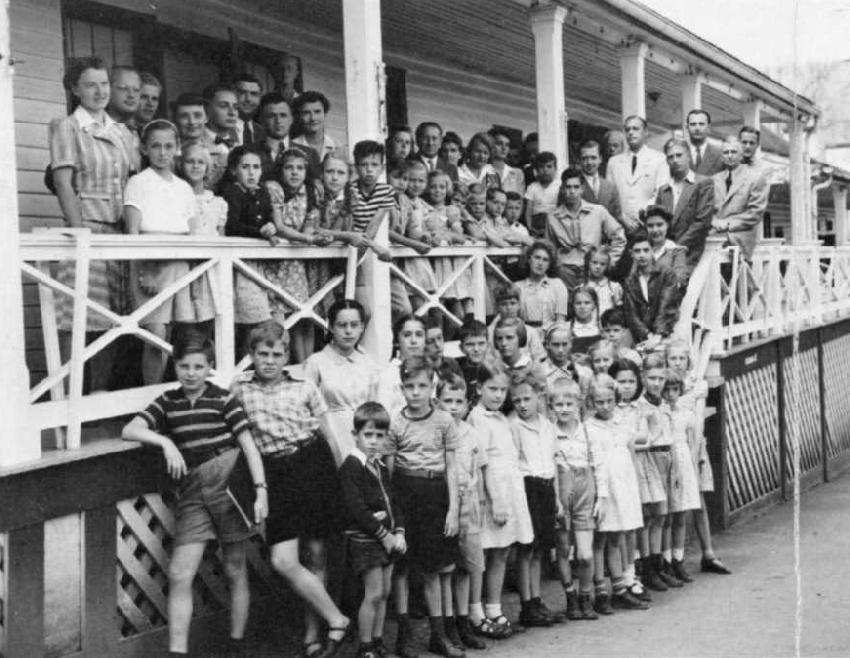
The war created costs exceeding 350 billion dollars and was also responsible for the deaths of 292,000 American soldiers. Separation from fathers or sons had devastating consequences, and many kids felt robbed of their childhood, missing out on having a fatherly figure. With each member of the family having to fill in for different roles, everyone was shocked and struggling to stay together as a strong unit.
Now there were around 5 million women known as "war widows" who had to carry a family on their back by themselves. However, they also needed to join the now-underpowered workforce and keep their family alive, abandoning their children to take care of themselves. These children were now known as "latchkey" children, having nobody to watch them for the majority of the day. Attracted by open jobs, many young adults dropped out of high school so that they could start taking in income to take care of themselves and their families.
American society also went down as a whole. The mood became dull and depressing, and people sometimes tried to close themselves off by others, struggling with depression or loss. Juvenile delinquency, venereal disease, and truancy rose at incredible rates. It seemed like the young generation was being torn apart by what was happening to the older generations around them. Their parents, friends, items, money, food, and many other things started to become unstable and created problems. It was a time of struggling and many hardships.
The war created costs exceeding 350 billion dollars and was also responsible for the deaths of 292,000 American soldiers. Separation from fathers or sons had devastating consequences, and many kids felt robbed of their childhood, missing out on having a fatherly figure. With each member of the family having to fill in for different roles, everyone was shocked and struggling to stay together as a strong unit.
Now there were around 5 million women known as "war widows" who had to carry a family on their back by themselves. However, they also needed to join the now-underpowered workforce and keep their family alive, abandoning their children to take care of themselves. These children were now known as "latchkey" children, having nobody to watch them for the majority of the day. Attracted by open jobs, many young adults dropped out of high school so that they could start taking in income to take care of themselves and their families.
American society also went down as a whole. The mood became dull and depressing, and people sometimes tried to close themselves off by others, struggling with depression or loss. Juvenile delinquency, venereal disease, and truancy rose at incredible rates. It seemed like the young generation was being torn apart by what was happening to the older generations around them. Their parents, friends, items, money, food, and many other things started to become unstable and created problems. It was a time of struggling and many hardships.
Life in a Weapons Factory
As most people know, since the majority of men were off to fight in WWII, it was up to women and children to take part in the war effort, sometimes meaning working in munitions factories.


Some of the jobs included positions such as welders, lathe operators, machinists, and riveters. Some jobs required incredible precision and technical, so many workers had to try to learn complicated procedures without proper education.
Everyday life became dangerous, as the main materials to work with were most of the time highly explosive materials and dangerous machinery. Combined with the fact that sometimes workers often worked 7 days a week, there was very large potential for accidents or harmful mistakes.
Sadly, in February 1944, there was an accident that hurt multiple people and instantly killed at least one person. In the Royal Ordnance Factory, 19 workers (mainly women) were filling trays of anti-tank mine fuses when one of those fuses exploded, setting off all of the others fuses in the tray.
The explosion instantly disintegrated the body of the girl working on it, and seriously injured even more people. The roof was blown off the building, the factory was partially destroyed, and one of the walls was actually swaying with the breeze outside.
These horrible working conditions weren't given much attention. In some factories, workers had to work with toxic chemicals, and those took care of chemicals like sulfur were known as "Canary Girls" because their skin and hair turned yellow from being so close to the chemical. The reason that not many spoke out about it was that they didn't want to be seen as "anti-war" or opposing the war effort of the country.
Gwen Thomas was one of the workers in munition jobs, and she recalled her experience working, saying that there was no training, and people went straight into making the shells and landmines. Workers were just told what to do as they filled the shells with TNT. There was a lot of precision involved, as the shell needed to be filled with TNT and a detonator and the exact right location. There was also a lot of heavy work that needed to be done, such as lifting up heavy shells and pieces of metal, with no machines to help out. Thomas remembered how once she slipped onto the floor and was covered in TNT all over her face, and in her eyes and nose. She was carted to a medical room where she had to get the TNT removed and sent back to work after an hour. Her face was red and scarred with hot TNT.
These were the type of events seen in normal life at munitions factories. They were, without a doubt, very dangerous and not managed well, but it was done for the war effort, no matter the costs.
Frank Sinatra
Frank Sinatra was an American singer and actor, rising to fame in the early 1940's. Born on the twelve of December, 1914, Sinatra suffered lifelong scarring and a damaged eardrum due to the use of forceps in assisting his mother's labor.
The damaged eardrum was enough to ensure Sinatra wouldn't serve in World War II- his enlistment was rejected. Shortly after, Sinatra signed with Columbia Record in 1943. Quickly gaining popularity and fame, Frank was viewed favorably among the American public. As his music career began to lose traction in the 1950's Sinatra pursued acting and achieved even more success.
Sinatra became one of the best selling artists ever, having sold over 150 million records and winning eleven Grammy's by the end of his career. Sinatra received the Presidential Medal of Freedom from President Reagan and and was regarded by Time Magazine as one of the twentieth century's most influential individuals.

The damaged eardrum was enough to ensure Sinatra wouldn't serve in World War II- his enlistment was rejected. Shortly after, Sinatra signed with Columbia Record in 1943. Quickly gaining popularity and fame, Frank was viewed favorably among the American public. As his music career began to lose traction in the 1950's Sinatra pursued acting and achieved even more success.
Sinatra became one of the best selling artists ever, having sold over 150 million records and winning eleven Grammy's by the end of his career. Sinatra received the Presidential Medal of Freedom from President Reagan and and was regarded by Time Magazine as one of the twentieth century's most influential individuals.
Marian Anderson

Marian Anderson was a famous singer and civil rights activist. Her parents first noticed her talent when she was around six years old, but they did not have the money to pay for lessons. Despite this, she began performing in the People's Chorus when she was ten years old. When she graduated high school, she applied to the Philadelphia Music Academy, but was not admitted because she was African-American. Although she was often discriminated against, she was determined and ended up winning a singing competition in 1925 after training under Giuseppe Boghetti for about a year.
After this, her career really started to take off, but despite her fame she was still discriminated against. The Daughters of the American Revolution refused to let her rent and perform at the Constitution Hall. This led Eleanor Roosevelt to resign fro the DAR, and she and the NAACP fought to allow Marian Anderson to sing at the Lincoln Memorial. She sang at the Eisenhower and Kennedy inaugurations.
Anderson also used her fame and the money she earned to support the Civil Rights Movement, holding concerts to earn money for the NAACP and CORE. Her last tour took place from 1964 to 1965, but she was politically active both before and after this. She was a delegate to the UN, a goodwill ambassador, and was awarded the Presidential Medal of Freedom, the Spingarn Medal from the NAACP, and a Grammy for Lifetime Achievement.
Subscribe to:
Posts (Atom)
-
The Flappers and Vamps were a generation of young women from the West, who completely challenged the idea of how women should act during in...
-
The Swastika, 卐, is a symbol that originated in Eurasia, that was meant to serve as a universal image for spirituality. It was also commonly...
-
The Jim Crow Museum, or the "Jim Crow Museum of Racist Memorabilia" is an official museum at Ferris State University in Michig...
